

Preparing for your child's surgery day starts with packing the essentials. Important documents, comfortable clothing, medications, comfort items, and personal necessities can help make the experience smoother and less stressful for both children and caregivers.
We've walked alongside hundreds of families as they prepared for their child's surgery day, and one thing we hear again and again is that the emotions can feel overwhelming. Even when you've packed every bag, completed every form, and followed every instruction, it's completely normal to feel anxious, nervous, hopeful, and exhausted all at the same time.
Many parents tell us they barely slept the night before surgery because they were replaying every detail in their minds. We understand that this isn't just another appointment; it's your child, and that carries a weight only a parent can truly understand.
We've also seen how a little preparation can bring a sense of calm during an emotional time. We remember one mother who carefully packed her child's favorite blanket, a small stuffed animal. She later shared that those simple items brought comfort not only to her child but to her as well. While every family's journey is unique, we've learned that the things you pack often represent much more than necessities; they carry familiarity. Remember that you're not facing this day alone. Our team is honored to support families through every step of the journey, offering guidance, compassion, and hope along the way.
Start with Important Documents
Before leaving for your appointment, make sure you have all necessary paperwork organized and easy to access.
Consider bringing:
- Identification for the parent or guardian
- Medical records or documents requested by the care team
- Insurance information, if applicable
- Emergency contact information
- A list of current medications
Keeping these items together in a folder can help reduce stress and ensure you have everything you need when you arrive.
Pack Comfort Items for Your Child
A familiar item can provide reassurance during an unfamiliar experience.
Helpful comfort items may include:
- A favorite stuffed animal or blanket
- Books, coloring supplies, or small activities
- Headphones and tablet or other devices with downloaded entertainment
- A favorite toy that is easy to carry
Whether your child is receiving care for microtia, hemifacial microsomia, a cleft condition, or another facial difference, familiar items can help create a sense of comfort and security throughout the day.
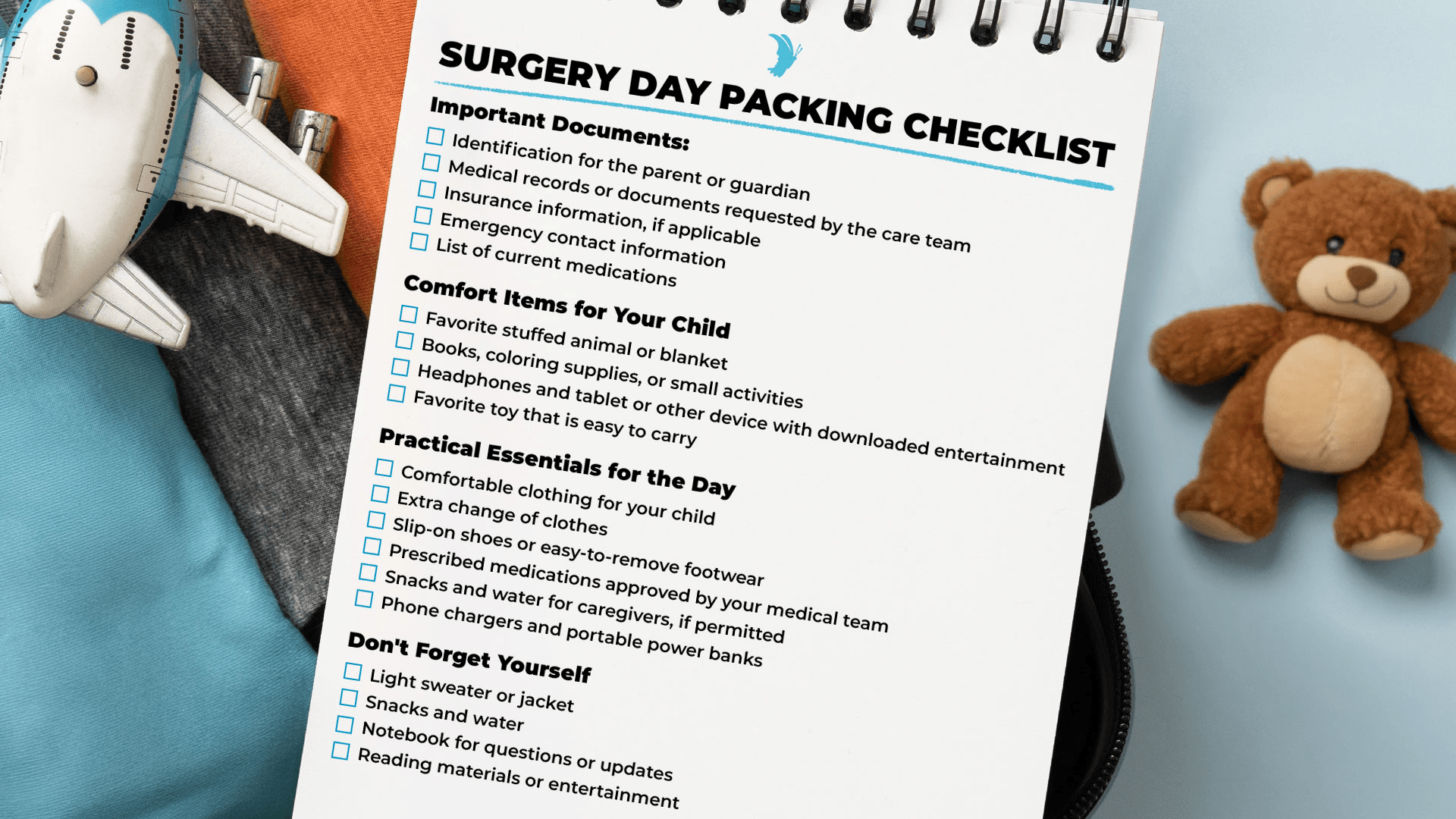
Bring Practical Essentials for the Day
Surgery days can be long, so it helps to be prepared for waiting periods and recovery time.
We recommend packing:
- Comfortable clothing for your child
- An extra change of clothes
- Slip-on shoes or easy-to-remove footwear
- Any prescribed medications approved by your medical team
- Snacks and water for caregivers, if permitted
- Phone chargers and portable power banks
Dressing your child in loose, comfortable clothing can also make the day easier for everyone involved.
Don't Forget Yourself
Parents and caregivers often focus entirely on their child, but your comfort matters too.
Consider bringing:
- A light sweater or jacket
- Snacks and water
- A notebook for questions or updates
- Reading materials or entertainment during waiting periods
Taking care of yourself helps you stay present and focused on supporting your child throughout the day.
Understanding Microtia, Hemifacial Microsomia, and Other Facial Differences:
Children come to us with many unique facial differences, including microtia, hemifacial microsomia, cleft conditions, facial paralysis, and other conditions. Every child's journey is unique, and every treatment plan is carefully evaluated based on their individual needs.
At Little Baby Face Foundation, our focus is not on appearance. We believe every child deserves the opportunity to live a healthy, confident life with the best possible function and quality of life. We know that many facial differences can affect important daily activities such as hearing, breathing, eating, speaking, or other essential functions. Our volunteer medical teams work to address these challenges through comprehensive care designed to support a child's overall health, development, and well-being.
We've seen firsthand how meaningful it can be for families when a child gains greater comfort, improved function, or new opportunities to engage more fully in everyday life.
While every outcome is different, our mission has always been about helping children thrive, supporting not only their medical needs but also the confidence and possibilities that come with improved health.
Whether your child has microtia, hemifacial microsomia, or another facial difference, we want families to know they are not alone. Our team is committed to providing compassionate guidance, answering questions, and helping families understand their options as they move forward on their care journey.
A Simple Way to Feel More Prepared
Preparing for surgery can feel overwhelming, but a thoughtful packing checklist can help reduce uncertainty and create a smoother experience.
At Little Baby Face Foundation, we understand that families are navigating important decisions and emotions during their child's care journey. Our goal is to provide guidance, support, and hope every step of the way.
If your child has a facial difference and you are exploring care options, we encourage you to learn more about our confidential application process. Our medical team carefully reviews each application to determine eligibility for treatment. As you continue preparing for your child's care journey, you may also find our guide, Signs of Normal Healing vs. When to Call the Doctor After Your Child's Surgery, helpful for understanding what to expect during recovery and when to reach out to your medical team with questions or concerns.
Frequently Asked Questions:
How early should we arrive on surgery day?
Every medical facility has its own requirements, so it's important to follow the instructions provided by your care team. Arriving early can help allow time for check-in, paperwork, and any pre-surgery preparations.
What should my child wear on surgery day?
Loose, comfortable clothing is often the easiest choice for surgery day. Clothing that is easy to put on and remove can help make the experience more comfortable before and after the procedure.
How can I prepare my child emotionally for surgery?
Simple, age-appropriate conversations can help your child understand what to expect and reduce anxiety. Bringing familiar comfort items and maintaining a calm, reassuring presence can also help your child feel more secure throughout the day.