When a child is born with an ear difference, parents often have questions about hearing, development, and what comes next. Surgery for kids with ear deformities may be one part of a child's care plan, depending on their unique needs. In our experience, families feel more confident when they understand the condition, know what options may exist, and have a trusted team to guide them through the process.
Surgery for kids with ear deformities may involve rebuilding or reshaping the outer ear, addressing an underdeveloped ear canal, or supporting hearing. The right treatment depends on the type of ear difference, the child’s age and development, hearing test results, and which parts of the ear or nearby structures are affected. Ear reconstruction and hearing treatment may be related, but they are not always the same procedure.
Over the years, we have met parents who felt frightened, overwhelmed, or unsure whether their child would be able to hear clearly, feel confident, or access the care they needed. We have also seen the relief that comes when families receive clear answers and understand that there may be a thoughtful path forward. No family should have to face those questions without support.
How Can Ear Differences Affect a Child?
Some children are born with differences that affect the outer ear, the ear canal, or nearby facial structures. These differences can range from mild to more complex, and every child is unique.
Some conditions may include:
- Microtia: A congenital condition in which one or both outer ears are smaller than expected, shaped differently, or not fully formed.
- Aural atresia: A condition in which the ear canal is absent, closed, or underdeveloped.
- Anotia: A rare condition in which the external ear is absent.
- Other ear differences: Congenital or acquired differences that may affect the ear’s shape, position, structure, or function.
The visible appearance of an ear does not always reveal how well a child can hear. Some children have normal hearing in the unaffected ear, while others may have hearing loss in one or both ears. Early hearing testing can help the medical team understand whether support is needed for speech, language, learning, and daily communication.
Some of our parents worry about whether these conditions will affect their child's future. While every situation is different, understanding the condition is an important first step toward making informed decisions with a qualified medical team.
When Is Surgery for Kids with Ear Deformities Considered?
Not every child will need surgery, and the timing depends on many factors. The right approach varies from child to child, and specialists consider factors such as age, overall health, hearing needs, and ear development before recommending treatment.
For some children, surgery may focus on rebuilding the outer ear. For others, treatment may involve improving hearing or addressing additional facial differences
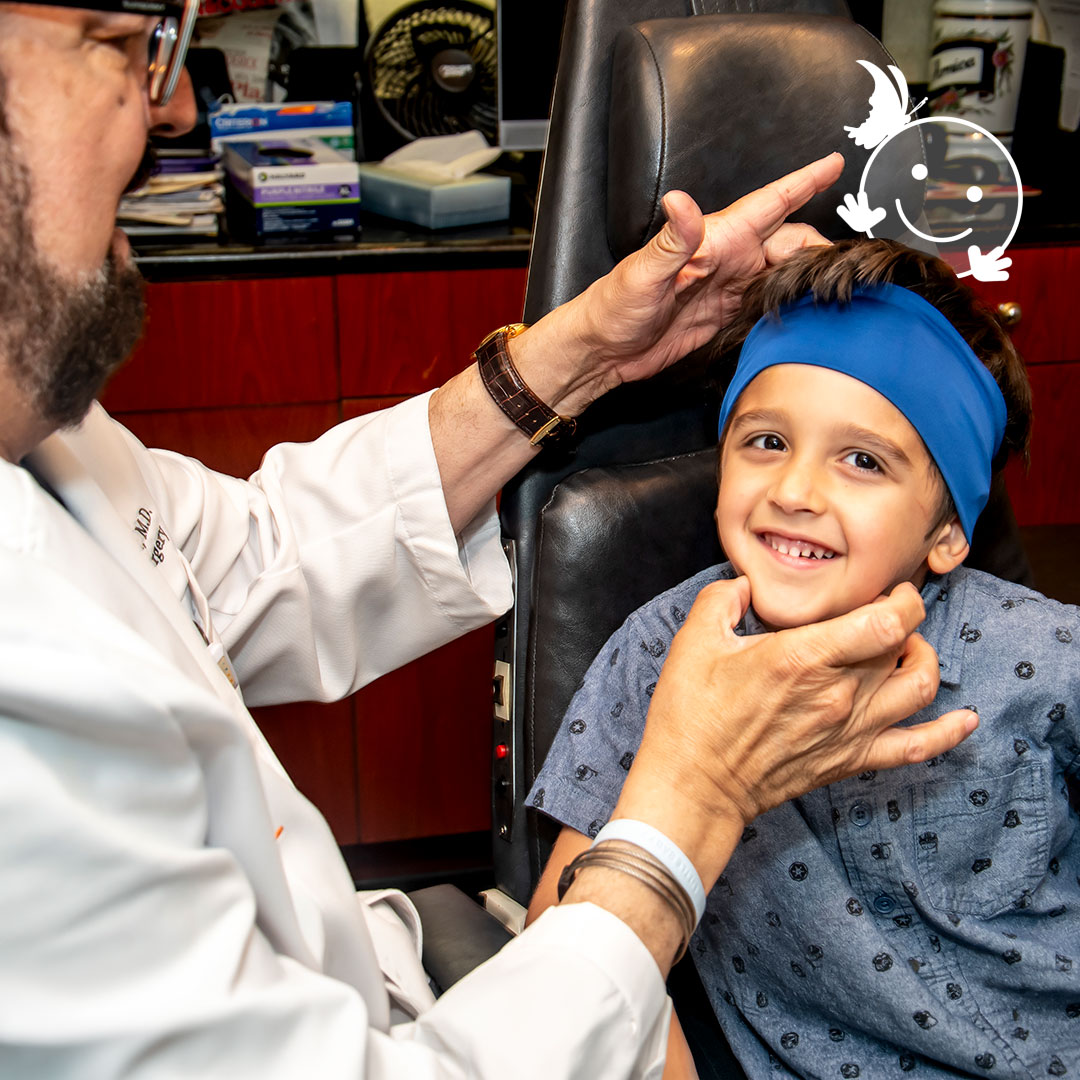
The type of procedure also affects timing. Some ear reconstruction techniques require a child to reach a certain age or size so enough rib cartilage is available. Hearing support may be recommended before outer-ear reconstruction if hearing loss could affect speech or development. In some cases, we may provide a bone-anchored hearing aid (BAHA) worn on a headband to support hearing without requiring an implant or procedure.
Surgical and nonsurgical options may include:
- Ear reconstruction using the child’s own rib cartilage
- A prosthetic ear in selected cases
- Ear canal or eardrum reconstruction when appropriate
- Bone-conduction or bone-anchored hearing devices
- Monitoring, hearing support, or other care without outer-ear reconstruction
There is no single option that is right for every child. The medical team should explain the benefits, limitations, likely number of procedures, recovery requirements, and long-term considerations for each approach.
Our patients and families often tell us that simply understanding the possible path forward helps reduce uncertainty. Learning about available options allows parents to ask informed questions during medical appointments and feel more prepared throughout the journey.
Does Ear Reconstruction Surgery Restore Hearing?
Not necessarily. Ear reconstruction focuses on creating or reshaping the visible outer ear. Hearing treatment focuses on helping sound reach the functioning parts of the ear and auditory system. A child may need one type of care, both, or neither, depending on their anatomy and hearing test results.
Hearing support may include a bone-conduction device, a bone-anchored hearing aid, ear canal reconstruction, or another approach recommended by an audiologist and ear specialist. Separating these two goals helps parents understand why rebuilding the outer ear may not automatically improve hearing.
How Are Hearing and Facial Differences Connected?
Some conditions affect more than the ears alone. Children with Treacher Collins syndrome or Goldenhar syndrome, for example, may also have differences involving the jaw, cheekbones, or other facial structures. Hearing may also be affected in some cases.
Microtia and aural atresia may also occur alongside craniofacial microsomia, sometimes called hemifacial microsomia, which can affect development of the ear, jaw, cheek, facial nerves, or soft tissues on one side of the face.
These conditions are often best evaluated by specialists who understand how facial growth, hearing, and overall development work together. Because every child is different, treatment plans are personalized rather than one-size-fits-all.
This is one reason comprehensive care matters. Looking at the whole child helps ensure that families receive thoughtful guidance tailored to their child's specific needs.
When Should Parents Seek an Evaluation?
Parents should consider an evaluation when a child is born with an ear that appears smaller, differently shaped, or incompletely formed, or when the ear canal appears absent or narrow. An evaluation is also important when there are concerns about hearing, speech, language development, balance, repeated ear problems, or related facial differences.
Seeking an evaluation does not mean surgery will be required. It gives families an opportunity to understand the diagnosis, complete hearing testing, meet the appropriate specialists, and learn what may need to be monitored as the child grows.
What Can Families Expect From Treatment?
Care often begins with an examination and hearing evaluation. Depending on the child’s condition, the medical team may recommend imaging, consultations with additional specialists, hearing support, monitoring, or a staged surgical plan.
Some forms of ear reconstruction require more than one operation. Recovery may involve protecting the reconstructed ear, limiting certain activities, attending follow-up visits, and allowing time for swelling and healing. The surgeon should explain the expected stages and recovery plan before treatment begins.
LBFF patient, Veronica’s experience shows how treatment may address both ear structure and hearing over time. Born with microtia and atresia, she first underwent surgery to create the framework for her ear. Her later care included ear reconstruction and placement of a bone-anchored hearing device to help sound reach her functioning inner ear.
Read Veronica’s microtia, atresia, and hearing treatment story.
Her experience is one example, not a universal treatment plan. Every child’s needs, procedures, and results are different.
How Little Baby Face Foundation Supports Families
We know that cost can become another source of stress for families already navigating a new diagnosis.
Our mission is to transform the lives and faces of children born with facial deformities through reconstructive surgery. When a child is accepted for care, our volunteer surgeons generously donate their time, while donations help cover important expenses such as special equipment fees, anesthesia, travel, and lodging. This allows eligible families to receive life-changing care at no cost.
For children with microtia, aural atresia, or related ear differences, care may include ear reconstruction, hearing support, or coordinated treatment with specialists in plastic surgery, otology, audiology, and craniofacial care. The services recommended depend on the child’s diagnosis and medical needs.
If you believe your child may benefit from our services, the first step is completing our confidential online application. Our medical team carefully reviews every application to determine eligibility and help families understand the next steps.
Every family's journey is different, and we are committed to providing compassionate support from the very beginning.
You Do Not Have to Face This Alone
For many parents, asking for help is a difficult step. You may have spent months or years searching for answers, worrying about cost, or wondering whether treatment is possible. Reaching out does not commit your child to surgery. It simply gives our team the opportunity to understand your child’s needs and determine whether the Foundation may be able to help.
No parent should have to carry every question alone, and families should not have to face the cost of medically necessary care without support.
Want to explore other facial differences beyond ear-related conditions?
Next, read: What Conditions Does Little Baby Face Foundation Help Treat?
It's our complete guide to the facial differences we help treat, what families can expect during the application process, and how we support children every step of the way.
Frequently Asked Questions About Surgery for Kids with Ear Deformities
What conditions may require surgery for kids with ear deformities?
Not every child with an ear difference will need surgery. Surgery for kids with ear deformities may be considered for conditions such as microtia, anotia, aural atresia, constricted ears, prominent ears, acquired ear injuries, or ear differences associated with craniofacial conditions. Whether surgery is appropriate depends on the child's specific condition, hearing needs, age, development, health, family preferences, and recommendations from their medical team.
Can children with microtia have hearing loss?
Yes. Some children with microtia also have hearing loss, especially if the ear canal is underdeveloped or absent. A hearing evaluation can help specialists understand a child's individual needs and whether early hearing support may be appropriate.
What is the difference between microtia and aural atresia?
Microtia affects development of the visible outer ear, while aural atresia affects development of the ear canal. A child may have microtia, aural atresia, or both conditions. Hearing can be affected when sound cannot travel normally through the ear canal and middle ear.
At what age can a child have ear reconstruction surgery?
The timing depends on the reconstruction method, the child’s size and development, overall health, and the surgeon’s recommendation. Some procedures require enough rib cartilage to build an ear framework, while other treatments may be considered at a younger age. Families can seek an evaluation before surgery is recommended, so they understand the possible timeline.
Does ear reconstruction surgery improve hearing?
Ear reconstruction does not always improve hearing because it primarily rebuilds or reshapes the outer ear. Hearing may require separate care, such as a bone-conduction device, a bone-anchored hearing aid, ear canal surgery, or another treatment recommended after hearing testing.
Does every child with microtia need surgery?
No. Some children may benefit from hearing support, monitoring, a prosthetic ear, reconstructive surgery, or a combination of options. The appropriate choice depends on the child’s anatomy, hearing, health, age, and the family’s goals.
Will ear reconstruction require more than one surgery?
It may. Rib-cartilage reconstruction is often completed in stages, while some alternative approaches may require fewer operations. Additional procedures may also be needed for hearing or other facial differences. The surgeon should explain the expected number and timing of procedures before treatment begins.
Which specialists may care for a child with an ear difference?
A child’s team may include an ear reconstruction surgeon, pediatric plastic surgeon, otologist or neurotologist, ENT specialist, audiologist, craniofacial surgeon, speech-language specialist, or other pediatric professionals. The team depends on which structures and functions are affected.
How does Little Baby Face Foundation help children with ear deformities?
We provide no-cost reconstructive surgery for eligible children with facial differences. When a child is accepted for care, donations help cover essential costs like special equipment fees, anesthesia, travel, and lodging.
For children with microtia, aural atresia, or related ear differences, the Foundation may also help coordinate evaluation and care with experienced ear reconstruction, hearing, and craniofacial specialists. Every application is reviewed individually to determine whether treatment is available through the Foundation.
How can families apply for help with surgery for kids with ear deformities?
A parent or guardian can begin by completing Little Baby Face Foundation’s confidential online application. The medical team reviews the child’s age, medical history, condition, photos, financial eligibility, and treatment needs before contacting the family about possible next steps.